
Website of the Month: Nikon’s company history online

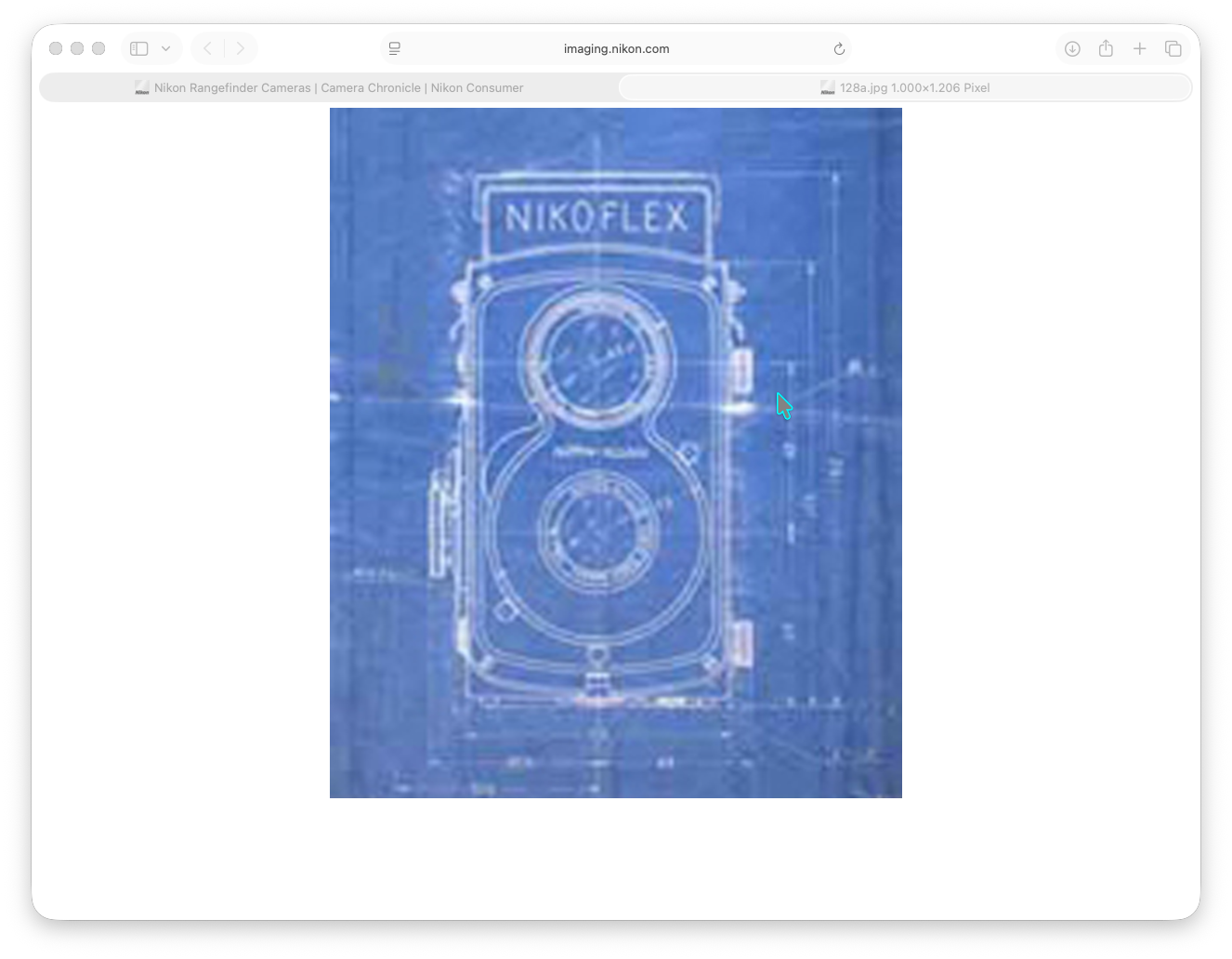
Visually simple, but packed with in-depth information - 🔗 imaging.nikon.com/imaging/information/
Anyone with a passion for the history of Japanese camera technology will find a real treasure trove at Nikon. Under the simple heading ‘Information’, the manufacturer maintains an extensive historical section on its website that goes far beyond the usual corporate window-dressing. What has been compiled here is less advertising than a lovingly curated archive, and three sections in particular are well worth a visit.
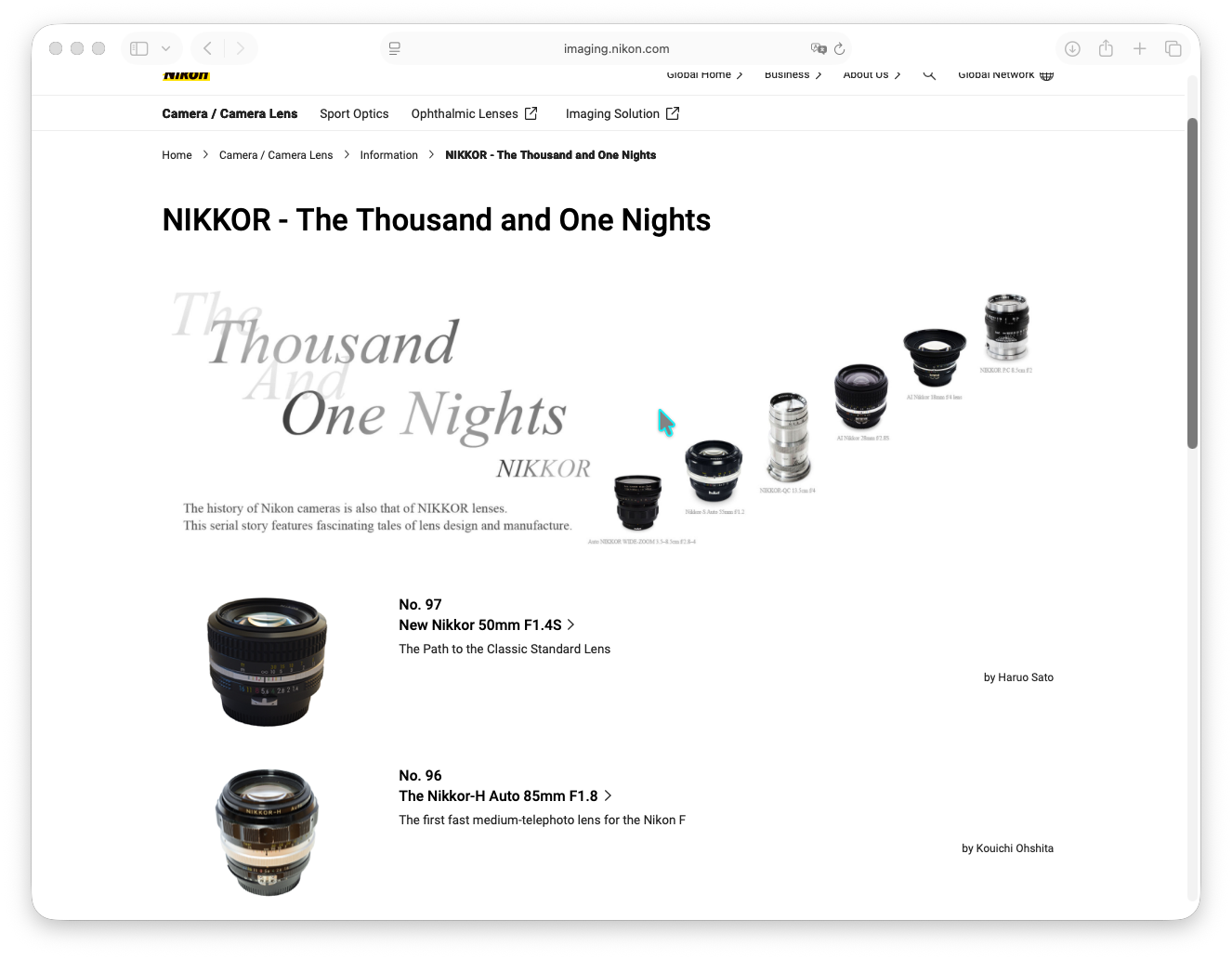
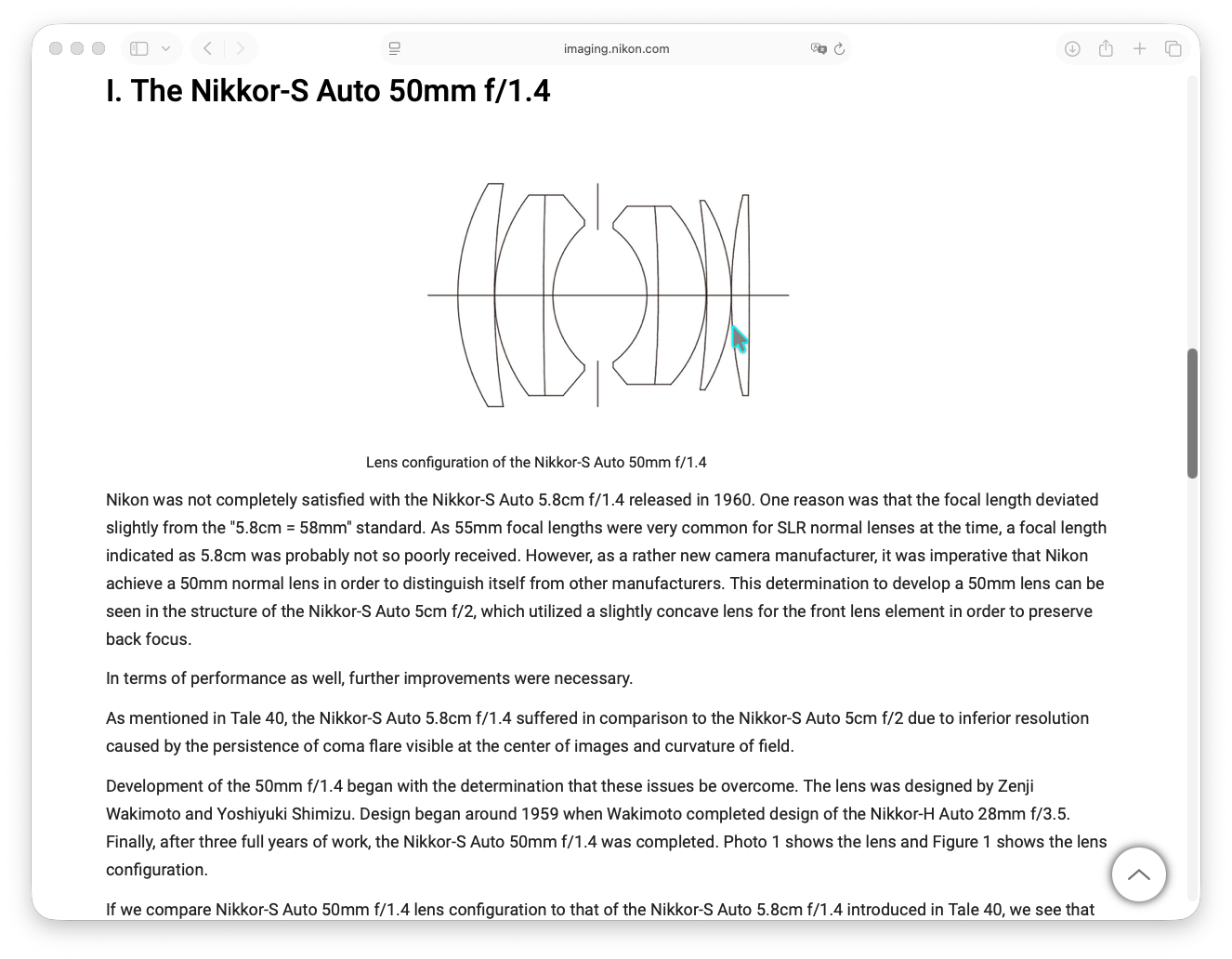
The highlight is undoubtedly ‘NIKKOR – The Thousand and One Nights’, a series of articles that has been running for many years and has now grown to 97 instalments. The articles are written by Nikon’s own designers, led by Haruo Sato and Kouichi Ohshita, who each select a single lens from NIKKOR’s history and describe its development. This is not about marketing, but about the genuine history of optical design: lens cross-sections, Gaussian types, the control of chromatic aberration, and the development of the world’s first aspherical SLR lens. Anyone who has always wanted to know why the Noct-Nikkor 58mm f/1.2 enjoys such a legendary reputation amongst collectors, why the extreme wide-angle 13mm f/5.6, or what considerations lay behind the famous 105mm f/2.5, will find first-hand accounts here, written with palpable passion. It is a rare stroke of luck that a manufacturer allows its engineers to speak in such detail and with such expertise.
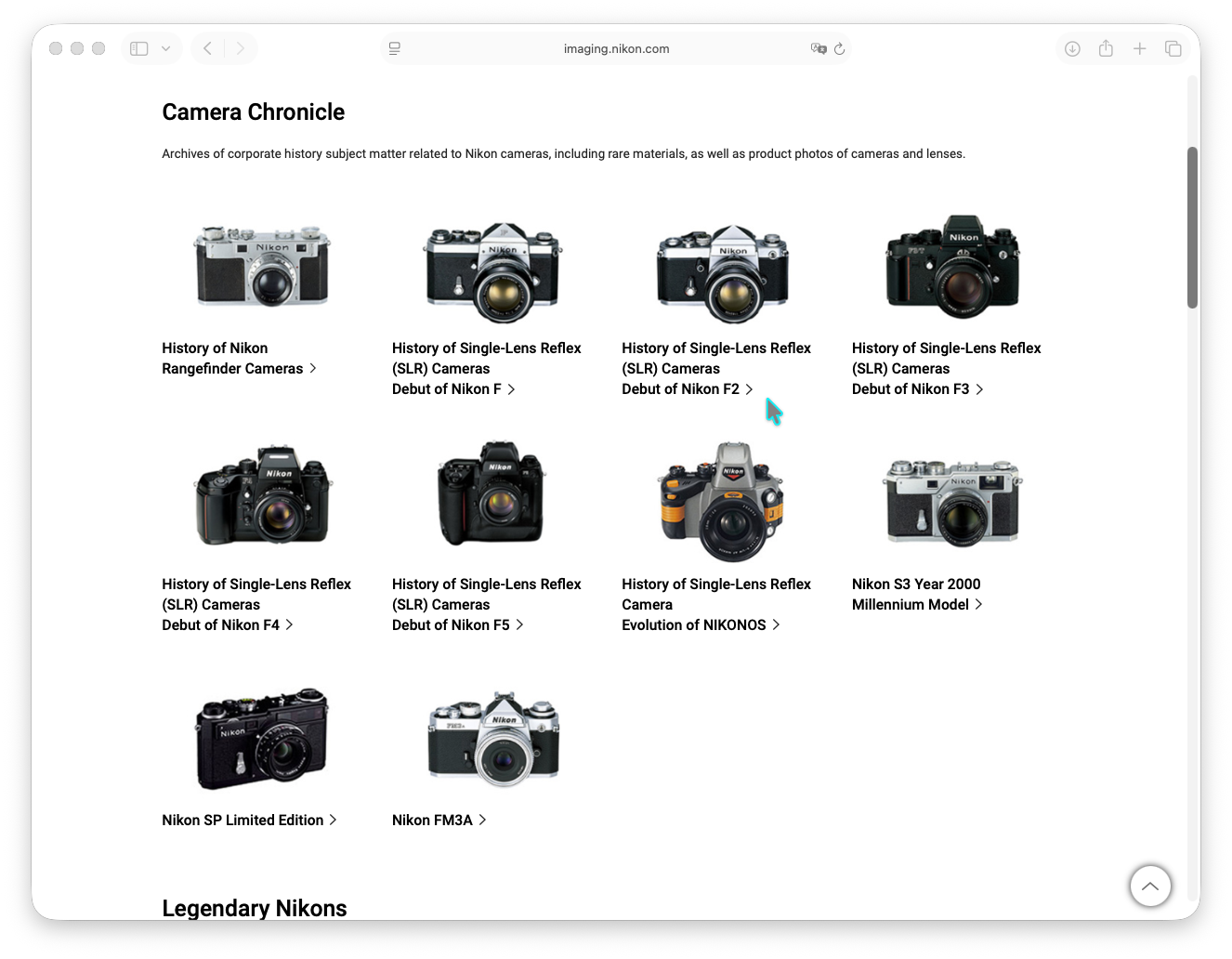
The second section, the ‘Camera Chronicle’, is devoted to camera bodies. It traces the history of Nikon rangefinder cameras, the major development of SLR models from the groundbreaking Nikon F through the F2, F3 and F4 to the F5, as well as the evolution of the NIKONOS underwater cameras and special series such as the Titan models and the cameras manufactured for NASA. Particularly charming is the ‘Legendary Nikons’ series, which recounts the company’s history in twelve narrative instalments with a touch of humour, and ‘Best of the Rest’, which is dedicated to those lesser-known models, the ‘Nikon cousins’, which otherwise tend to fade into the shadows of their famous siblings: the NIKKOREX range, the Nikomat models and many others that do not feature in any ‘best of’ lists but nevertheless deserve their place in history.
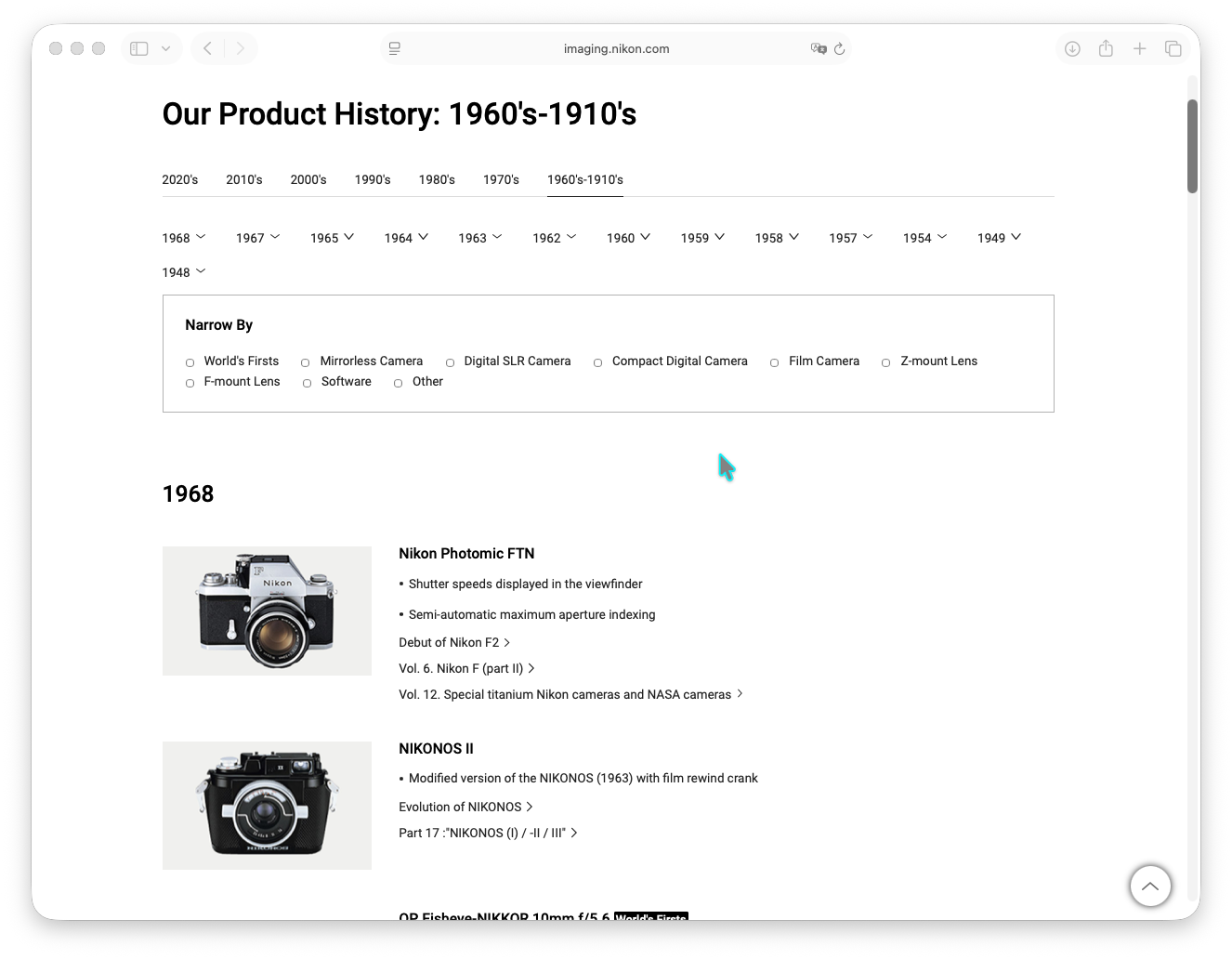
Finally, the third section, ‘Our Product History’, offers a comprehensive chronicle of products from the 1940s right up to the present day, clearly organised by decade and accompanied by product photographs and brief technical descriptions. Anyone wishing to place a particular camera or lens in its historical context will quickly find reliable key data here; and, incidentally, it is a superb way to trace how the optical pioneer of yesteryear became today’s digital conglomerate.
Allow us to make a brief comment, particularly in a year in which we are celebrating the Zeiss Ikon anniversary and delving deeply into this great tradition: One may well hope that other companies of comparable historical significance will one day present their rich past with similar depth and technical rigour, as Nikon demonstrates here. This is not a criticism, for every company sets its priorities differently, and there are, of course, excellent sources on Zeiss elsewhere – not least thanks to the work of dedicated collectors and authors. Yet Nikon impressively demonstrates that a company’s history can be far more than just a glossy timeline: namely, an ongoing commitment to its own craft, written by those who practise it.
A visit is highly recommended to anyone who not only wants to collect camera technology but also to understand it. You rarely return without having learnt something new, and many an hour flies by whilst browsing.
🔗 imaging.nikon.com/imaging/information/