A weekend as a 19th century photographer - an experience report
The workshop "A weekend as a 19th century photographer" for members of Club Daguerre took place twice at Atelier Malek in Schwabbach near Heilbronn, and both events were a complete success. Those who were able to attend returned with the feeling that they had not only learnt something about the beginnings of photography, but had actually experienced it.
Mr and Mrs Malek led us through the weekend with a naturalness that can only come from years of practice. Their expertise, excellent equipment and very personal hospitality made the three days a small, self-contained experience from the very first minute.
This video compiled by Nicole Malek gives a nice impression: https://club-daguerre.eu/videos/workshop.mp4
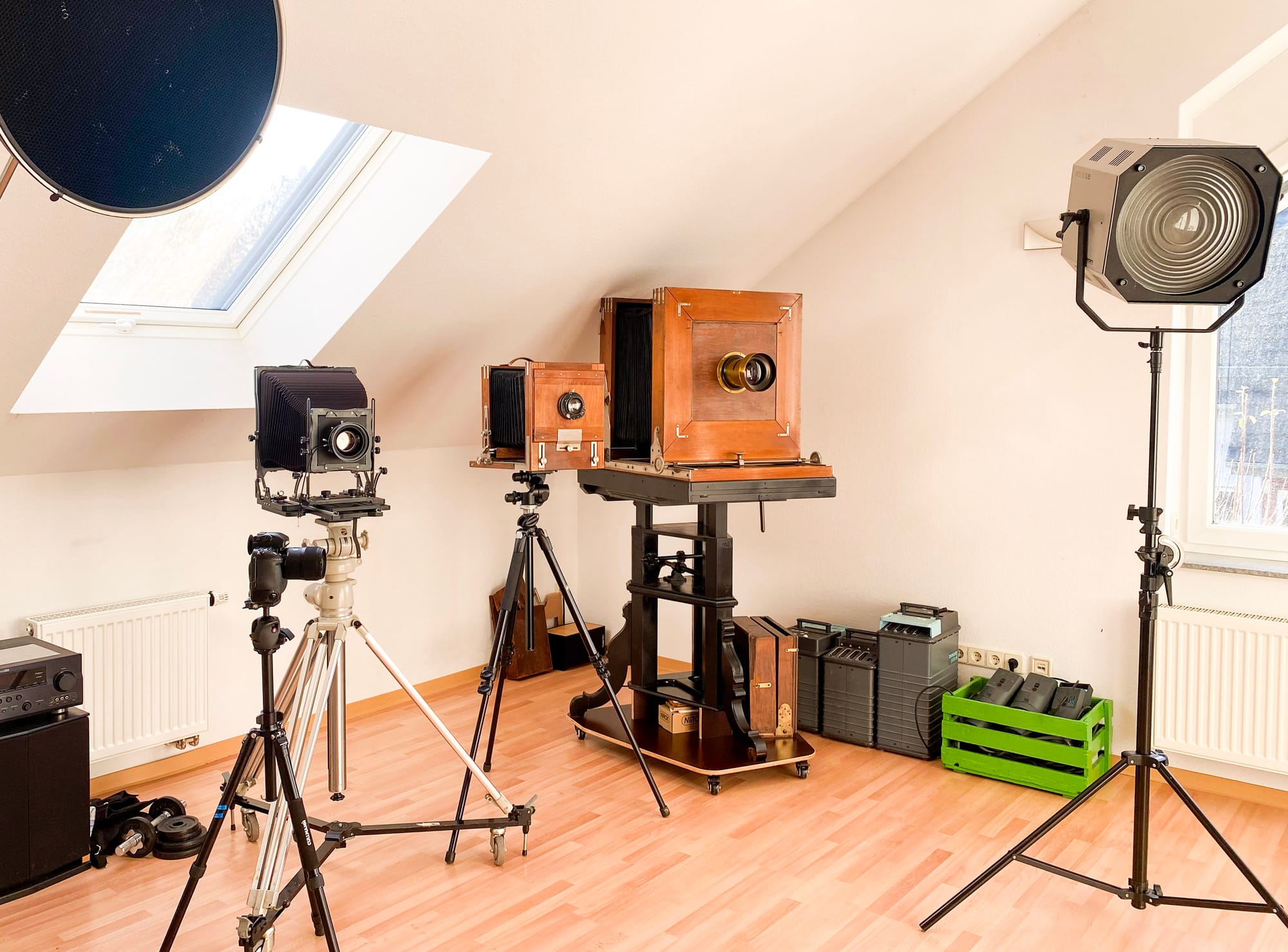
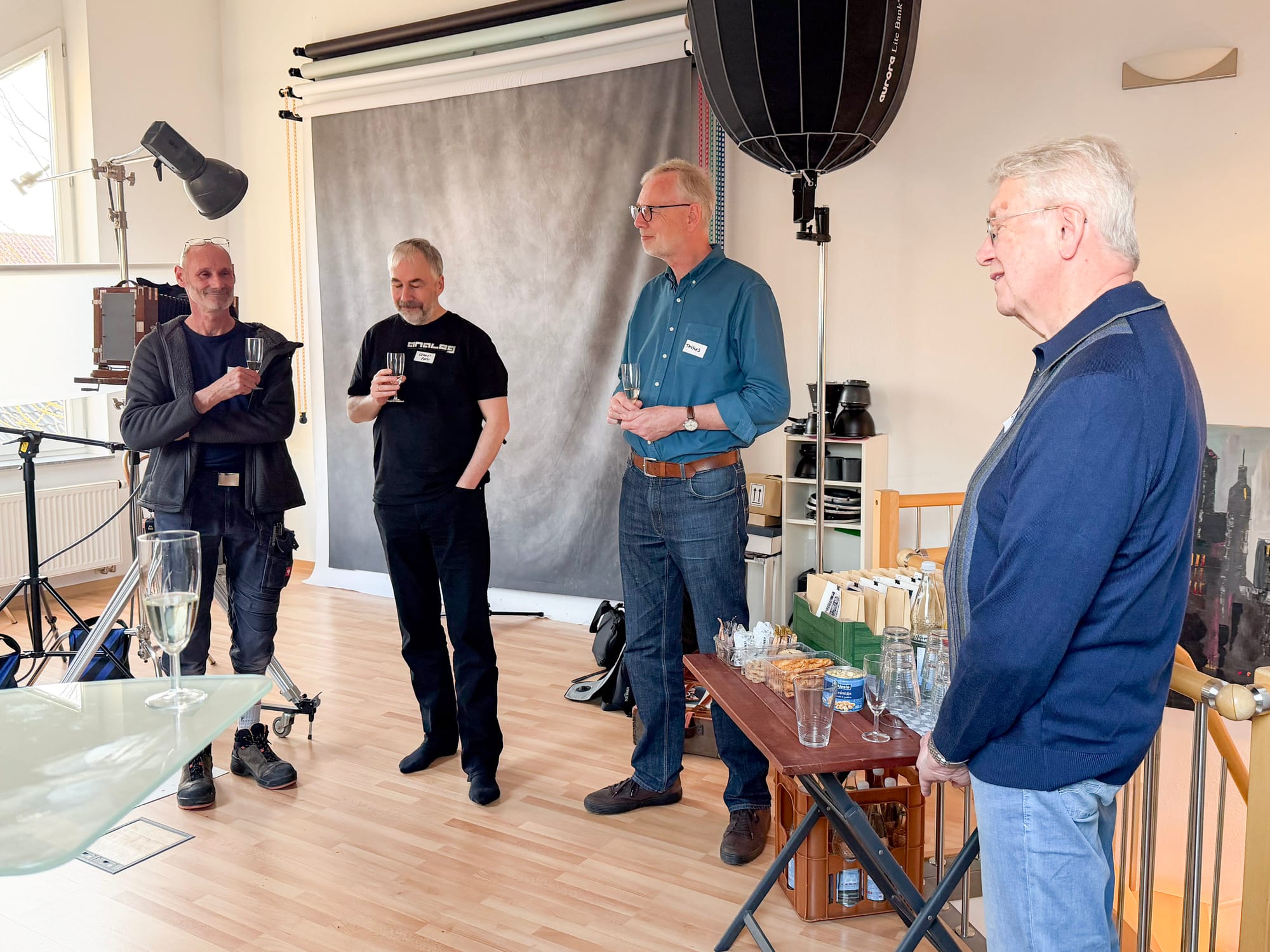
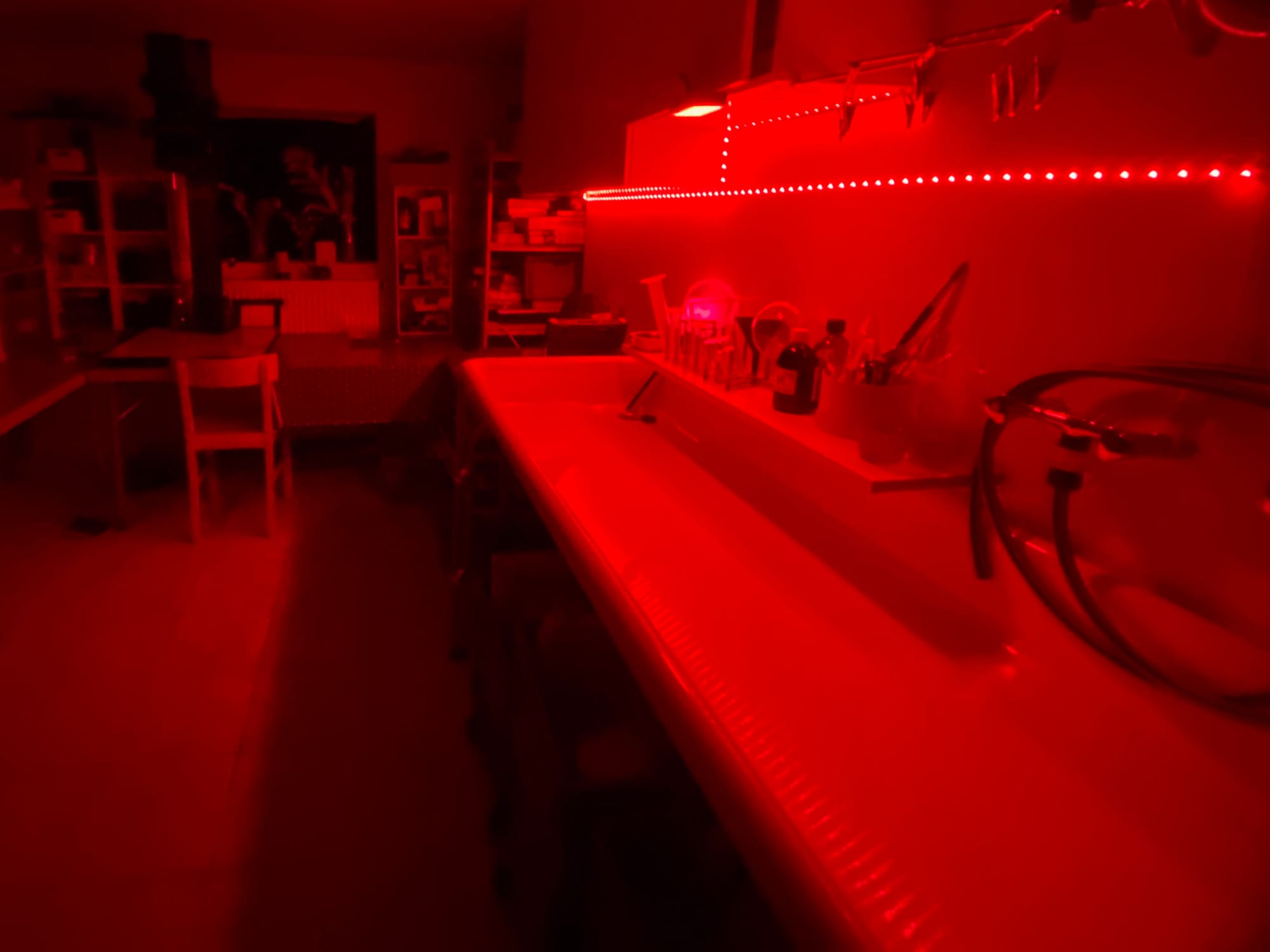
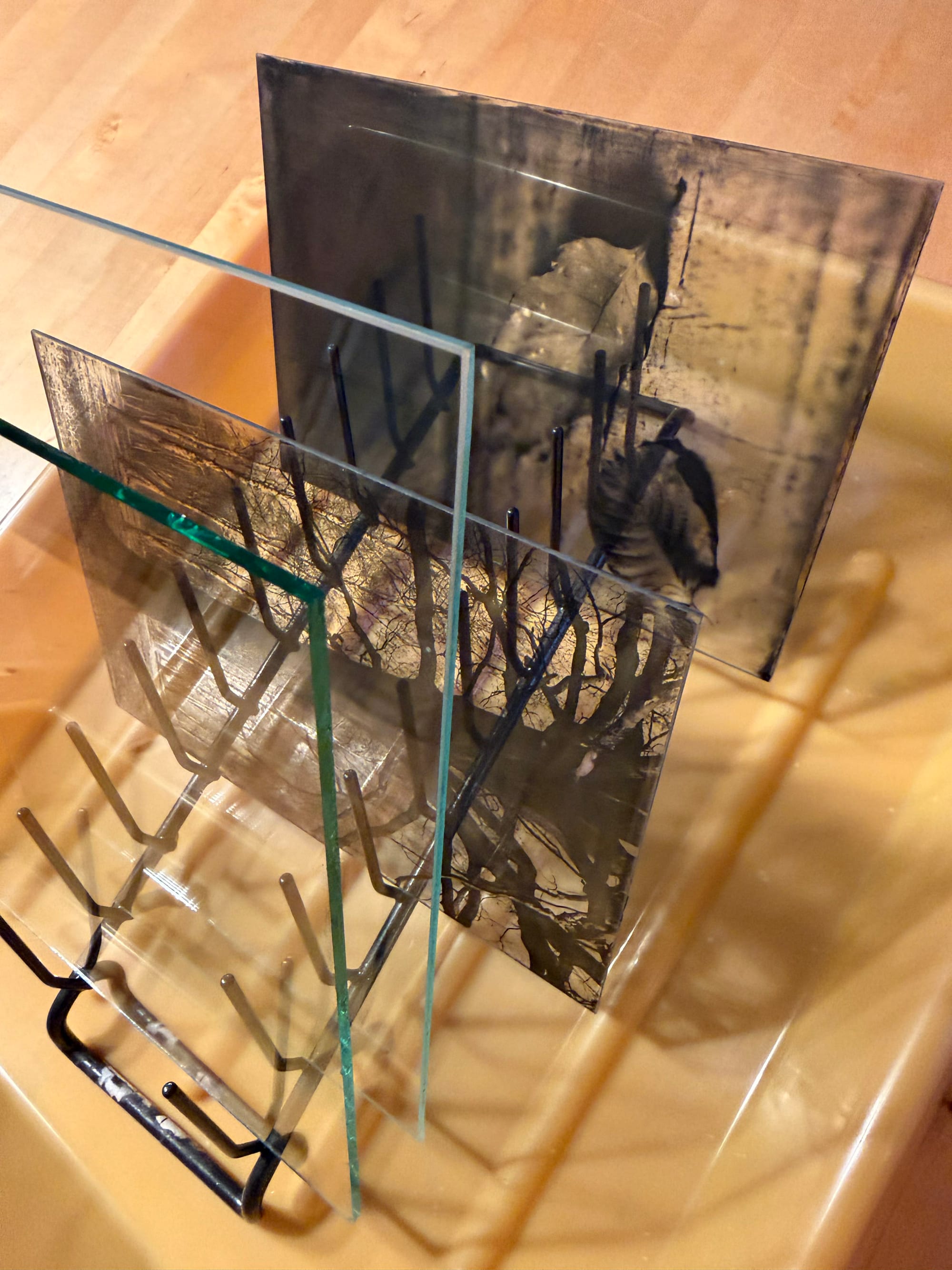
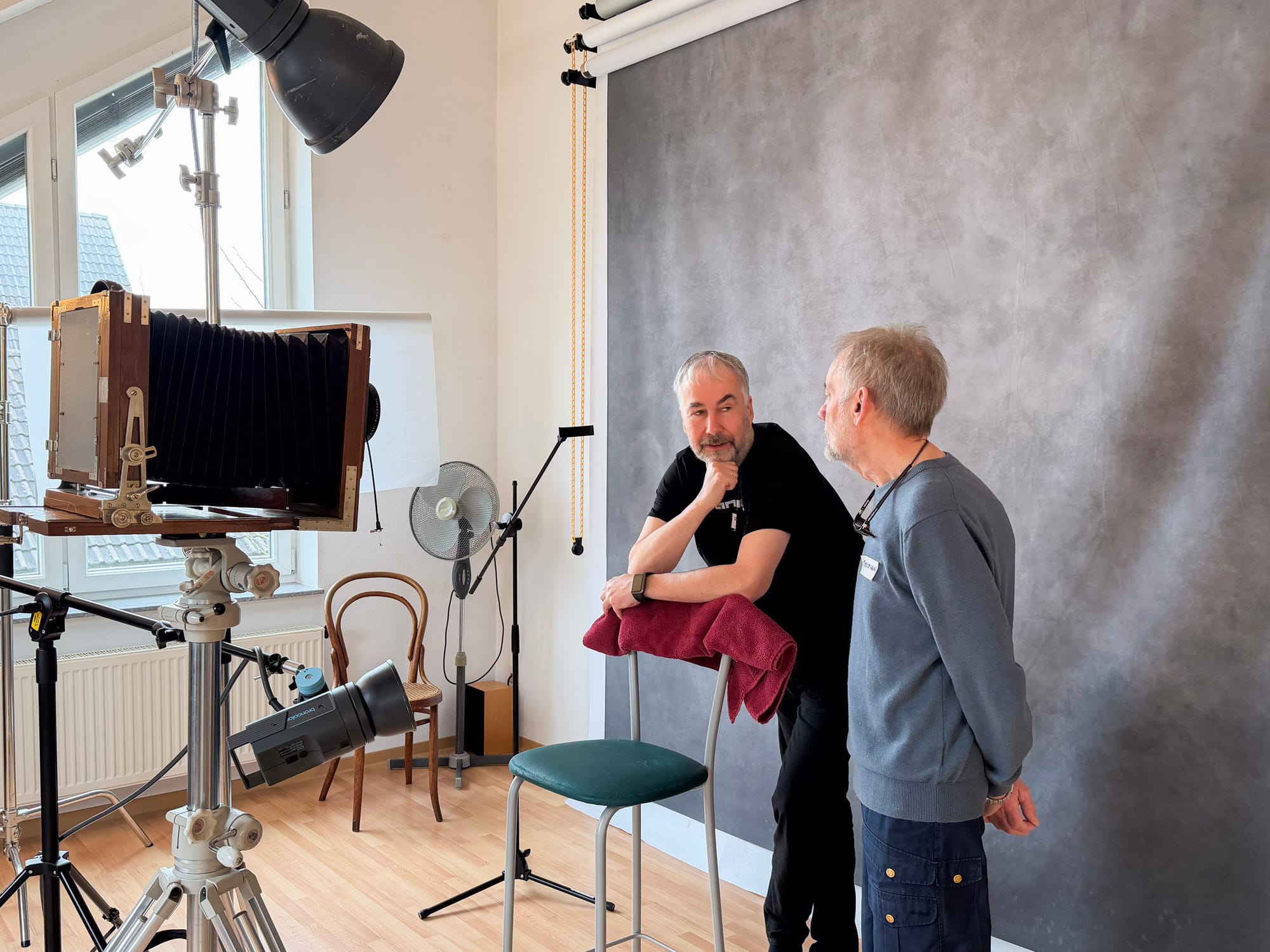
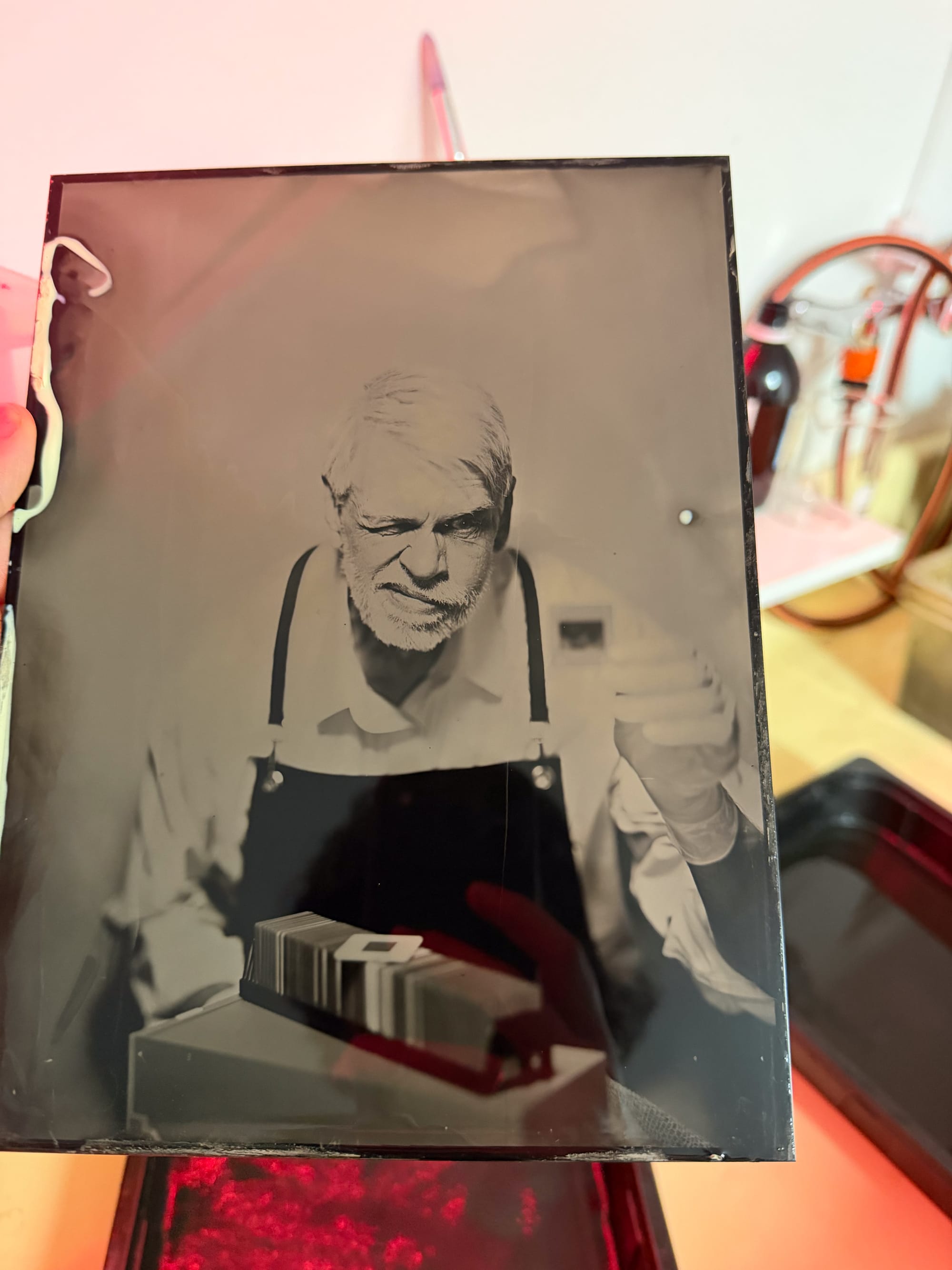
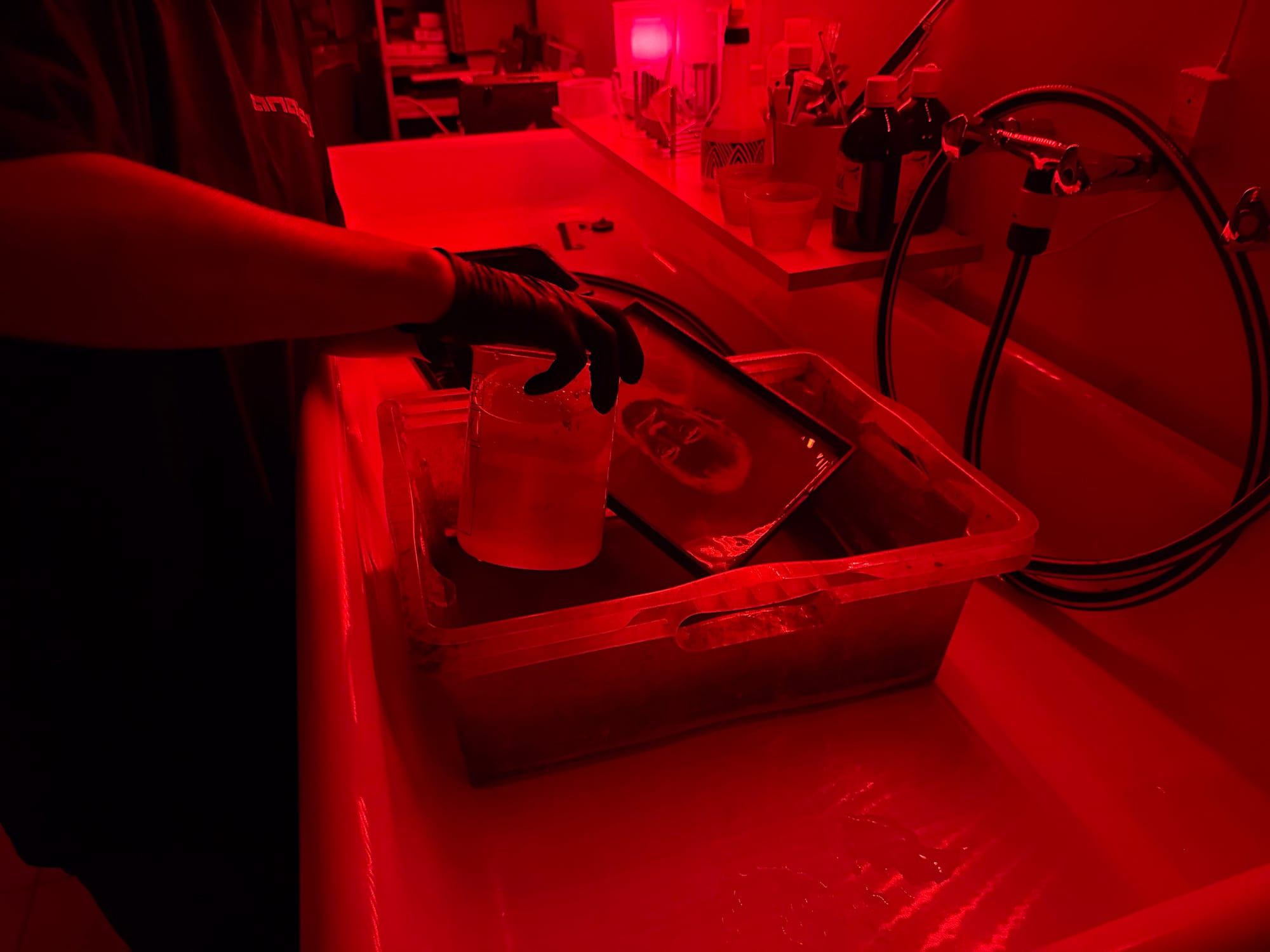
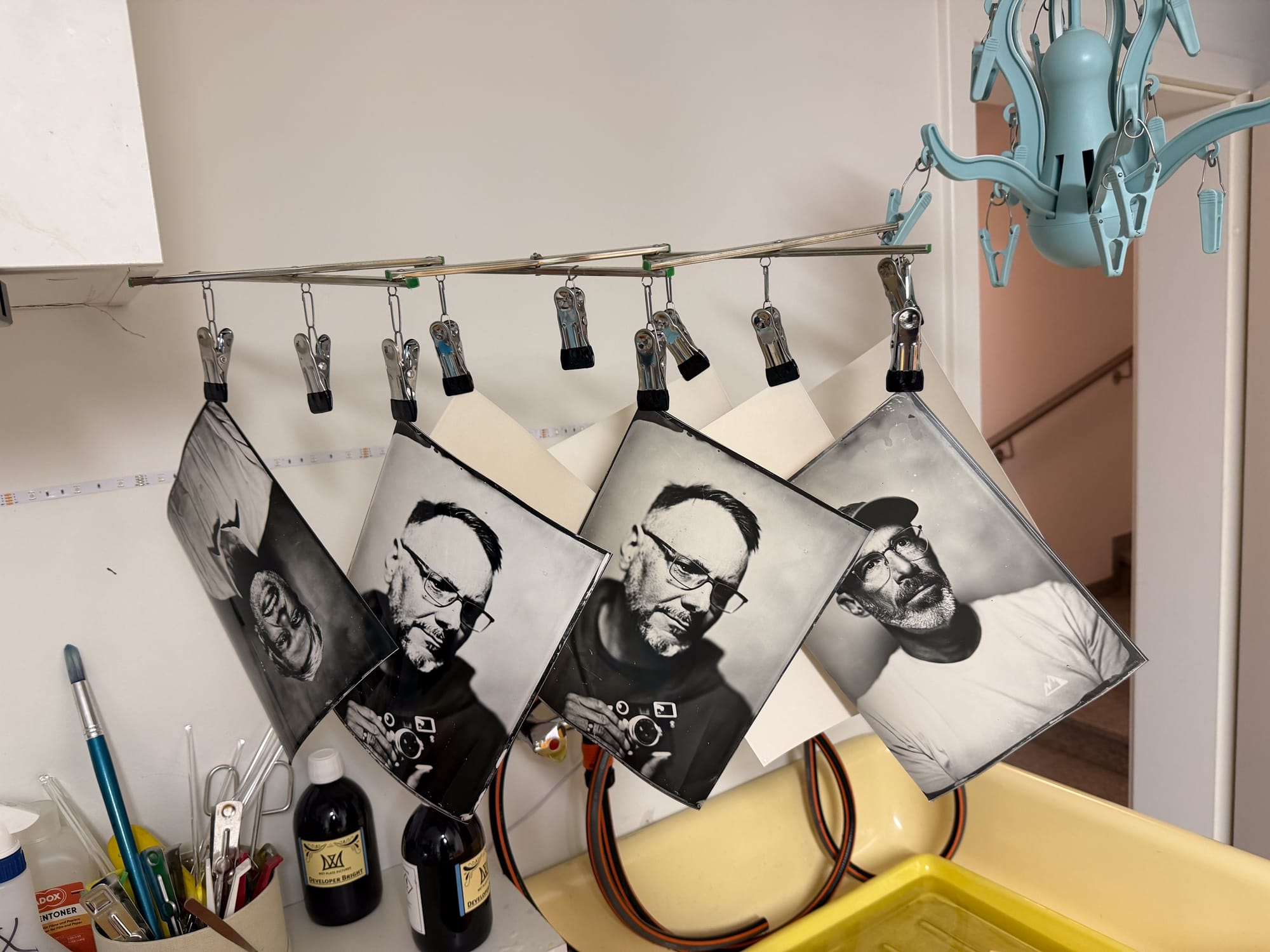
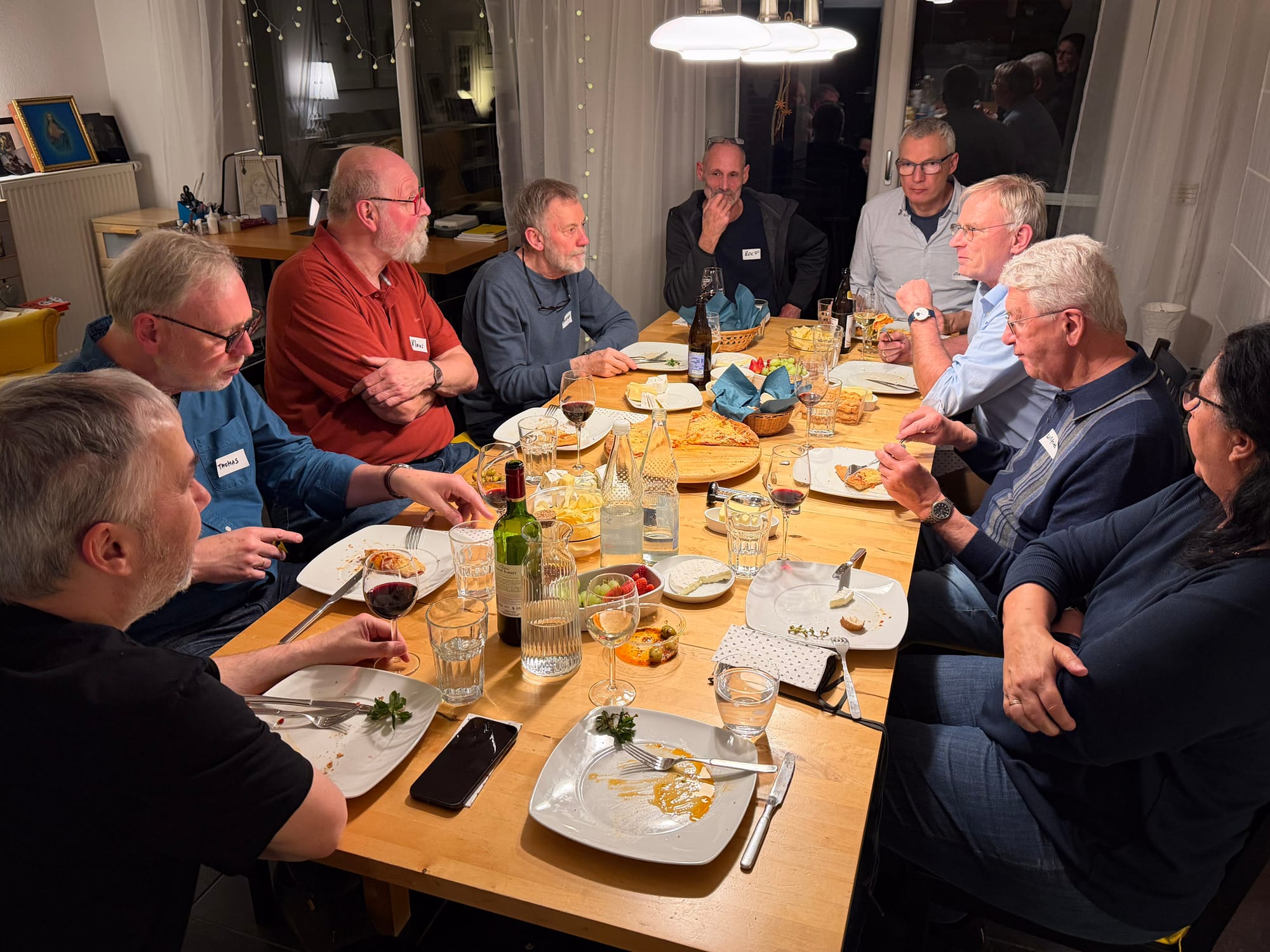
Some impressions from Nicole Malek
Friday began with the opalotype, a direct process from the middle of the 19th century. This process can be used to create a positive image on glass. A negative is projected onto the freshly coated glass plate with an enlarger, developed and intensified. The finished plate is then coated with white colour from behind. The process is better known as Orotone, but the only difference is the colour of the back - which in this case would be gold.
On Saturday, the wet plate took centre stage, initially as ambrotypes in 18×24 cm format (wet plates on clear glass). What then happens in front of the camera is one thing; the fact that Mrs Malek cut each glass plate herself beforehand and got it free of grease down to the last trace in a two-stage process is another. Without this quiet preparatory work in the background, the pictures would not exist. And then the coating itself: the light-sensitive collodion liquid has to run evenly over the plate in a single, smooth stroke, without ripples, without bubbles, and without build-up, and all under time pressure, because the collodion must not dry. Mrs Malek's hand remained uniquely steady, and even here it became clear that this seemingly simple movement is a small art of its own. The self-coated plates have an estimated sensitivity of ISO 1 to 2, which is precisely why the powerful flash units were ready in the studio to provide the required amount of light in an instant. Contact prints were made from the ambrotypes on photographic paper in order to fully utilise the advantage of the ambrotype.
Ferrotypes on black lacquered aluminium plates followed in the afternoon. Now it was the participants' turn to pour the collodion liquid over their plates, and it soon became clear how difficult this one smooth stroke really is. Portraits were created according to the wishes of the participants, and then came the moment that you never forget: in the darkroom, the first image traces slowly emerged from nowhere, and before the eyes of those present, an image was created that had never existed before. In the evening, the day was rounded off together in the "Besen", a regional wine tavern.
Sunday was dedicated to cyanotype, and after the intricacies of the wet plate, it seemed almost relaxing: a comparatively simple process with its own quiet beauty that most of the participants will certainly continue to pursue at home. The participants were allowed to take home all of the works created during the weekend, so in the end they were left not only with memories, but also with tangible unique pieces created by their own hands.
Club Daguerre will repeat further formats of this kind with the Maleks in the future; in the Bretzfeld studio or at other locations. Corresponding dates will be announced in Club Daguerre aktuell in good time. Anyone who not only collects and researches photography, but would also like to experience it with their own hands, is warmly recommended to visit Mr and Mrs Malek in Schwabbach. Information at https://experience-collodion.de/